Geeta Verses 1.20–1.24: A Chariot Stopped Between Right and Wrong
Verses and Translation
Sanskrit:
अथ व्यवस्थितान् दृष्ट्वा धार्तराष्ट्रान् कपिध्वजः।
प्रवृत्ते शस्त्रसम्पाते धनुरुद्यम्य पाण्डवः॥
Translation:
Then, seeing the sons of Dhritarashtra (Kauravas) positioned in battle, Arjuna, whose chariot bore the emblem of Hanuman, raised his bow in preparation to fight.
Verses 1.21–1.22
Sanskrit:
हृषीकेशं तदा वाक्यमिदमाह महीपते।
सेनयोरुभयोर्मध्ये रथं स्थापय मेऽच्युत॥
यावदेतान्निरीक्षेऽहं योद्धुकामानवस्थितान्।
कैर्मया सह योद्धव्यमस्मिन् रणसमुद्यमे॥
Translation:
At that time, Arjuna said to Krishna (Hrishikesha):
“O Achyuta, place my chariot between the two armies so I may observe those assembled here who are eager for battle, and see with whom I must fight.”
Verse 1.23
Sanskrit:
योत्स्यमानानवेक्षेऽहं य एतेऽत्र समागताः।
धार्तराष्ट्रस्य दुर्बुद्धेर्युद्धे प्रियचिकीर्षवः॥
Translation:
Let me see those who have gathered here to fight, eager to please the evil-minded son of Dhritarashtra (Duryodhana).
Verse 1.24
Sanskrit:
एवमुक्तो हृषीकेशो गुडाकेशेन भारत।
सेनयोरुभयोर्मध्ये स्थापयित्वा रथोत्तमम्॥
Translation:
O Bharata (Dhritarashtra), thus addressed by Gudakesha (Arjuna), Lord Hrishikesha (Krishna) placed the finest chariot between the two armies.
Section 2: Scenic Context
Just before the war begins, Arjuna asks Krishna to take the chariot to the centre of the battlefield. He doesn’t want to stand with the Pandavas right now. He doesn’t want to look at the Kauravas from the comfort and bias of his own side. He wants to go to the middle. To see things from a neutral space. To see clearly. To see honestly.
This is strange, isn’t it? After everything that has happened — the years of exile, the humiliation of Draupadi, the countless insults, the injustice — still Arjuna wants to pause. Still he wants to ask: Am I doing the right thing? Still, he wants to check: Are we truly on the side of dharma, or have we also fallen somewhere?
It’s not weakness. It’s rare honesty. He doesn’t let pain and ego cloud his judgement. He doesn’t let the noise of the past define what action he takes next. He wants to observe both sides — not as a Pandava, not as a prince, not as a warrior — but as a human being standing between two armies.
This is where Arjuna rises above us. Because when we face conflict, we usually don’t think twice. We don’t hesitate to take sides, to pass judgement, to react. We assume we’re right. We assume they’re wrong. And we act. No pause. No self-inquiry. No neutrality. But Arjuna — in that one moment — chooses distance. He chooses silence. He chooses a better view.
This scene is not about strategy. It is not about war positioning. It’s about clarity. Arjuna wants to see — not through the eyes of a Pandava — but through the eyes of truth. And for that, he needs to stand alone, in the centre.
Section 3: Symbolic Reflection
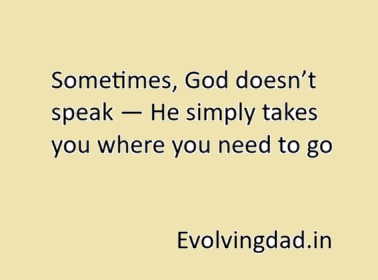
When Arjuna asks Krishna to take the chariot to the centre, Krishna doesn’t say a word. He doesn’t give advice. He doesn’t argue. He just quietly obeys.
And this silence… it says everything.
Here is God Himself — the Supreme Being — holding the reins of the chariot, taking orders from a confused human. But He doesn’t interrupt. Because Krishna knows, sometimes the journey to truth cannot be taught. It has to be seen. It has to be felt. And that’s only possible when you stop seeing from the edges and dare to stand in the middle.
Krishna could have easily asked Arjuna, “Why do you want to go there? What difference will it make? You already know what they’ve done.” But He doesn’t. And that tells us something very deep — Krishna is not in a hurry to deliver wisdom. He’s in no rush to preach the Gita. He knows that before wisdom can land, the heart must break open.
Krishna knew Arjuna was confused. He knew this hesitation was not just about battle strategy — it was a deeper tremor of the soul. But even then, He holds back. He lets Arjuna walk into that confusion fully. Because unless Arjuna sees the whole picture, unless he feels the storm inside himself, the words of the Gita would only bounce off the surface. They wouldn’t enter.
This is the quiet compassion of Krishna — He doesn’t push clarity on us. He allows us to arrive at it ourselves. He knows the right moment. He knows that spiritual teachings are not medicine you force down someone’s throat. They are seeds. And for the seed to take root, the soil must be ready. Arjuna had to stand in the middle, see with his own eyes, and begin to crumble from within — only then would he be ready to listen, to absorb, to surrender.
Krishna taking the chariot to the centre is not just about movement on a battlefield. It’s the soul being taken to the centre of a dilemma. It’s the shift from action to reflection. From anger to awareness. From “I know” to “Let me truly see.”
Arjuna is not being shown the enemy. He is being shown himself — through the faces of those he must fight. And standing there in the middle, in silence, is the beginning of the real war — the inner one.
The symbolism is powerful. The chariot is your life. The horses are your senses. Arjuna is you — the one holding the bow, torn between duty and doubt. And Krishna is your higher self — calm, patient, silently guiding, never forcing.
In that moment, Krishna teaches us something without saying a single word:
“If you truly want to see the truth, you must be willing to leave your side.”
Most of us never do that. We live our whole lives trapped in our side of the story — our pain, our justifications, our version of right and wrong. But Arjuna dares to step into the centre, and that makes all the difference.
That one moment, that one pause, that one silent ride to the middle of the battlefield — it becomes the doorway to the entire Bhagavad Gita.
Section 4: Final Reflection – Bringing It Back to Us
This moment from the Gita isn’t just about Arjuna. It’s about all of us. We all face battles — not with bows and arrows — but with decisions, duties, relationships, and confusions.
The question is — from where are we seeing the world? Are we standing only on our side of the story? Or are we willing to walk into the middle and look from a neutral ground?
We often believe we are right. We act from pain, from habit, from emotion. But rarely do we pause and ask ourselves, “What if I’m not seeing the full picture?” That’s what Arjuna does. He doubts not his strength, but his clarity. And that doubt becomes the doorway to wisdom.
Krishna’s silence teaches us something just as important. Don’t rush to fix someone’s confusion. Let them feel it. Let it unfold. Let them ask the right questions. Only then will the answers land with meaning.
In a world that celebrates quick opinions, fast reactions, and instant judgments — Arjuna teaches us the value of slowing down before taking sides. He shows us the courage it takes to stand alone in the middle, with an open heart and an honest question:
“Am I truly doing the right thing?”
Maybe that’s where real growth begins
Please also read my previous blog about Geeta 1.19 Geeta 1.19: The Shankh Naad That Shook the Heart
Read here my next blog about Geeta 1.25 to 1.30 When Battlegrounds Turn Within: Arjuna’s Inner Breakthrough (Gita 1.25–1.30)
You May Also Like
2 Comments
Pingback:
Pingback: