Everything You Need to Know Before Buying a Stroller for Your Baby
1. Introduction
When we found out we were having twins, the word “stroller” barely made it to our priority list. Diapers, bottles, formula, feeding schedules — those took over everything. But as weeks turned into months, and the fatigue started settling into our bones, we realised we needed one thing that could make our daily life little easier — and that was a stroller.
At first, it felt like a luxury. But now, after living this parenting journey day and night — quite literally — I can tell you this: a stroller is not a luxury. It’s a sanity-saving tool for both babies and parents.
What surprised me more was how the stroller didn’t just serve the babies. It became a part of my healing too. When I started using it during my daily walks, it gave me something more than fitness. It gave me space to breathe, to reflect, and to simply be. In a phase of life where everything felt chaotic, those walks became a quiet rhythm I looked forward to.
In this blog, I’ll share everything I’ve learned about strollers — not just as a father of twins, but as a man trying to balance survival, bonding, and a bit of peace in between. From how to choose the right one, to whether you even need one at all — I’ll share what we learned the hard way, so you don’t have to. Sometimes, the smallest decisions — like getting a stroller — can become the quiet turning points in your parenting journey.
2. Why a Stroller is More Than a Baby Accessory
Before we became parents, we used to think strollers were just “extra.” A nice-to-have item — maybe something stylish parents pushed around in parks or malls. But we were wrong.
Once our twins arrived, life became a constant juggle of feeding, burping, cleaning, soothing, and barely sleeping. Stepping out with both babies felt like a mission we didn’t have the strength for. That’s when the stroller slowly revealed its real power — it gave us movement without chaos.
It wasn’t just about putting the babies in and taking a round. It was about having a system — something that let us take both children outdoors safely, helped them settle when they were cranky, and even gave us those rare moments of silence when both dozed off together.
And for me personally, it became a gateway back to myself. On days I felt exhausted, emotionally numb, or simply stuck inside the walls of our home — pushing the stroller out for a 15–20-minute walk started feeling like therapy. It got the babies fresh air and gave me a breather from the mental clutter.
So, no — a stroller isn’t just an accessory. It’s a bridge between staying trapped and staying sane. It’s for the baby, yes — but it’s also for the parent who’s silently trying to hold everything together.
3. Stroller + Daily Walking = Win-Win for Parents
When you’re a new parent — especially to twins — the idea of self-care feels like a cruel joke. Sleep disappears, eating becomes irregular, and the word “exercise” starts sounding like it belongs to a past life. But somewhere along the way, I realised that if I didn’t take care of myself, I would eventually break down — physically and mentally.
That’s when I started using the stroller not just for the babies, but as part of my own walking routine. I began with small goals — 15 minutes in the morning, 10 minutes in the evening.
And those walks changed something in me. They became a pause button in the non-stop chaos. As I walked with my daughter, watching her look around at the trees, lights, and people, I felt grounded again. I wasn’t just “handling” my child — I was with her. I started feeling lighter. Fitter. Calmer.
From a fitness point of view, it helped me restart movement without needing a gym or a strict routine. The stroller gave me a reason to walk, and walking gave me the strength to deal with everything else.
So, if you’re struggling to find time for yourself, try this: combine your baby’s stroller time with your walk. Don’t think of it as multitasking — think of it as healing together.
4. Benefits of a Stroller for Babies
We often look at baby products in terms of convenience for the parent — and yes, a stroller does make life easier. But what truly surprised me was how much our babies benefited from the stroller in ways we hadn’t expected.
1. Soothing and Sleep-inducing
There’s something about the gentle motion of a stroller that calms babies down — even when nothing else works. Many evenings, one or both of our twins would be cranky and overstimulated indoors. A short stroller ride, even just around the building compound, would calm them down and sometimes even put them to sleep. It became a natural sleep trigger, especially for evening naps.
2. Exposure to the outdoors
Fresh air, new sights, people passing by all stimulates a baby’s senses in a gentle and safe way. It’s a soft introduction to the world, and you can see their curiosity grow. My daughter’s expressions during our walks — wide-eyed, alert, trying to follow sounds and lights — felt like moments of discovery for both of us.
3. Mental stimulation without overstimulation
Unlike screens or loud toys, the outside world offers balanced stimulation. It helps in brain development without overwhelming the baby. A stroller helps babies take it all in at their own pace, securely buckled in and protected.
4. Routine and Structure
Babies thrive on routine. When a daily stroller walk becomes part of their day, it creates predictability — something comforting for little minds. It also helps set internal body clocks, especially in terms of nap and wake cycles.
5. Bonding Time
Lastly, and most importantly — stroller time isn’t just “outside time.” It’s bonding time. Whether it’s quiet eye contact, softly talking to your baby, or simply being present with them — that walk can deepen your connection in ways that feel natural and calm.
So, while the stroller started as a tool of convenience, we soon realised it was actually a gentle vehicle for growth, calm, and connection — for our babies and for us.
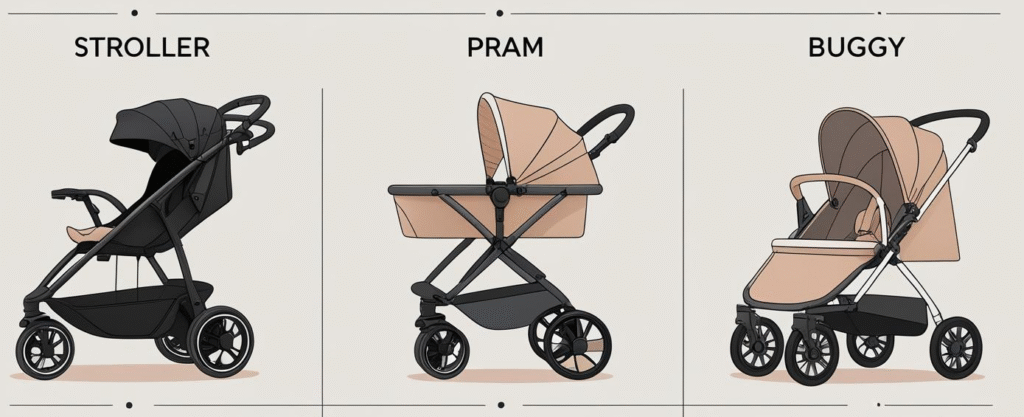
5. Stroller vs. Pram vs. Buggy – What’s the Real Difference?
When you walk into a baby store or browse online, the variety of baby carriers can be overwhelming. What’s worse — the terms “pram,” “stroller,” and “buggy” are often used interchangeably, but they refer to different stages and use cases.
Let me explain what each one means in plain language — and what you really need to know before buying.
Pram: The Newborn Nest
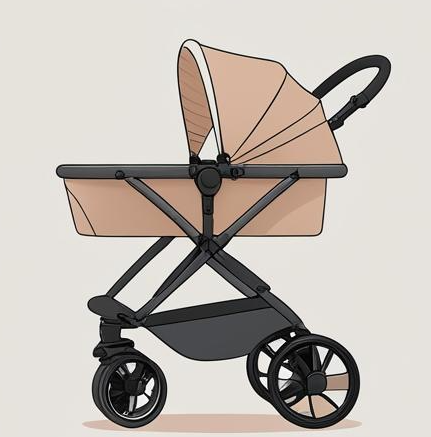
Think: baby lying flat, facing you, cocooned in comfort.
- Designed for: Newborns (0–6 months), especially before the baby can hold their head up.
- Position: Always in a fully flat recline, mimicking a bassinet.
- Facing: Usually parent-facing, which helps in bonding and monitoring.
- Usage: Ideal for short outdoor walks during the early months.
- Size & Storage: Prams are generally bulkier, harder to fold, and take up more space.
🔍 Good to know: Babies need to lie flat in the early months to support spinal development and breathing. A pram is safest for this stage.
✅ Perfect if: You want luxurious comfort in the early months, and don’t mind the size.
❌ Not ideal if: You want one solution from newborn to toddler stage — most prams are outgrown quickly.
Stroller: The Long-Term Travel Buddy
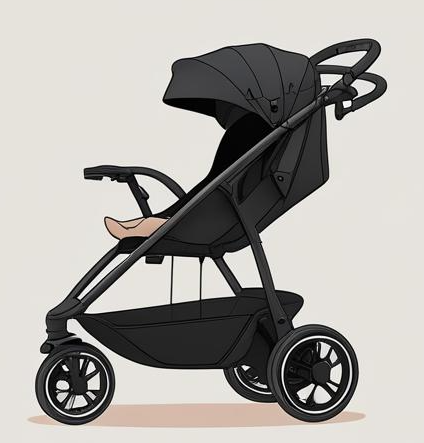
Think: adjustable seat, more features, grows with your baby.
- Designed for: Babies from 6 months to 3–4 years, though many offers recline suitable for newborns.
- Position: Adjustable seat — can sit upright, recline, or even lie flat in some models.
- Facing: Mostly forward-facing, though some have reversible seats.
- Usage: Ideal for daily walks, shopping, travel, and long-term use.
- Features: Usually includes canopy, storage basket, reclining seat, harness, and brakes.
🔍 Real benefit: Many modern strollers come with multi-position reclines and soft padding, making them safe even for 3–4-month-olds.
✅ Perfect if: You want something that lasts beyond the newborn stage, is foldable, and easy to carry.
❌ Watch out for: Super cheap ones with poor suspension or non-reclining seats — not suitable for naps or younger babies.
Buggy: The Minimalist On-the-Go Option
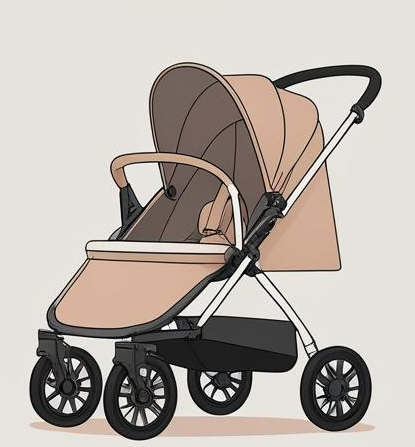
Think: lightweight, folds small, for quick errands or travel.
- Designed for: Older babies and toddlers (usually 1 year+) who can sit steadily.
- Position: Limited recline or none, upright seat.
- Facing: Always forward-facing.
- Usage: Quick outings, mall visits, airports, or as a backup stroller.
- Features: Compact, featherlight, often with no storage or minimal padding.
🔍 Biggest plus: Ultra-portable and often budget-friendly — great for quick, no-frills outings.
✅ Perfect if: You want a second stroller for travel, or your toddler just needs occasional rides.
❌ Not suitable for: Younger babies, naps, long walks, or uneven Indian roads.
🛠️ Summary Table:
| Feature | Pram | Stroller | Buggy |
| Age Group | 0–6 months | 6 months – 4 years | 1 year+ |
| Recline | Full flat | Adjustable (can be flat or upright) | Slight or no recline |
| Weight | Heavy and bulky | Moderate weight | Very lightweight |
| Direction | Usually parent-facing | Mostly forward-facing | Forward-facing only |
| Folding | Difficult or not foldable | Foldable (often one-hand fold) | Very easy fold |
| Storage Basket | Often missing or small | Medium to large basket | Usually small or none |
| Best For | Newborn naps and walks | Daily long-term use and versatility | Travel, malls, quick errands |
🧠 Final Thought:
If you’re a first-time parent — don’t get carried away by looks or labels. Focus on:
- Your baby’s current age
- Whether you’re okay with upgrading later or want one long-term solution
- How much space you have in your car/home
- And whether both parents will use it independently
In our case, we realised early that a reclining stroller was far more practical than a pram. We got more use, more flexibility, and didn’t need to buy multiple products as the babies grew.
Twin stroller or 2 separate strollers: Dilemma of parents of twins
- My honest recommendation: Start with one stroller and observe how your babies respond to it.
Some babies are naturally more comfortable with the stroller — while others might resist it completely. For example, in our case, my baby boy enjoyed the stroller walks in the morning, while my baby girl preferred evening strolls as she usually woke up later. So their routines rarely matched — and having a single stroller worked better for us. - Rather than rushing into buying a bulky twin stroller, try this approach:
- Buy one stroller first.
- Test it with both babies individually.
- If both take well to it, you can later buy a second stroller and either:
- Use them separately, or
- Attach them side-by-side using stroller connectors available online.
- This setup is more flexible, especially for parents like us who often manage outings solo or have unpredictable baby schedules.
Twin strollers, while convenient on paper, are often heavier, bulkier, and hard to fit through narrow doors or tight paths. - In short, don’t over-invest too early. Test and adapt. Your babies will guide you better than any product manual.
6. Closing Thoughts – A Note Before You Buy
Becoming a parent, especially a twin parent, teaches you one big lesson: don’t rush to buy everything at once. We’re constantly learning, adapting, and finding what truly works for our babies—not what advertisements or influencers say.
When it comes to strollers, it’s not a one-size-fits-all situation. Take your time. Observe your baby’s mood, routine, and comfort level. Start small and let your choices grow with your babies.
If you’re a twin parent, my honest recommendation is to begin with a single stroller. Try it for a few weeks. If both your babies enjoy it, you can decide whether to buy a second stroller or invest in a connector to link them. Trust me, bulkier twin strollers often sit unused when your babies have different preferences or schedules.
Also, don’t forget—your stroller can be more than just baby gear. It can be your walking companion, your mental escape, and a way to bond with your little ones under the open sky.
Also read here about the 5 sleep hacks every parent must know 5 Practical Sleep Strategies Every Twin Parent Must Know